
 [/vc_column_text][separator width=”95%” height=”1px” color=”#dddddd” margin_top=”0″ margin_bottom=”20px”][/vc_column][/vc_row][vc_row][vc_column]
 [/vc_column_text][vc_empty_space height=”10px”][vc_column_text css=”.vc_custom_1507633366715{padding-bottom: 10px !important;}”]
Nutritional properties and beneficial effects of pumpkin
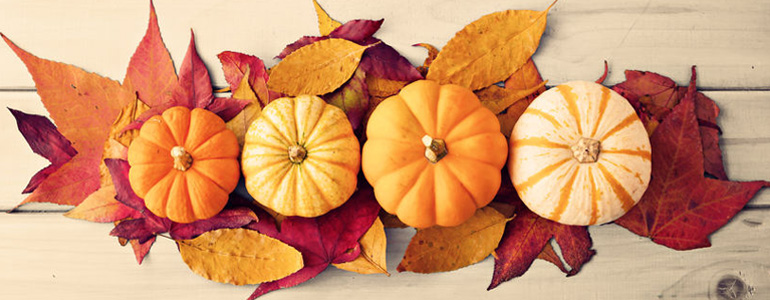
Pumpkin is a widespread and pleasant vegetable, thanks to its sweet flavour and to its soft texture suitable for various preparations. Originally from the Americas, the pumpkin was a basic food of the pre-Columbian people’s culture.
This autumn vegetable belongs to the Cucurbitacee family – as well as zucchini, cucumber, watermelon and melon; – there are several species including the Cucurbita moscata (varieties such as the violin or Chioggia squash) and the Cucurbita maxima (such as the poppy-berry or the pumice pumpkin).[/vc_column_text][/vc_column][/vc_row][vc_row][vc_column][vc_column_text css=”.vc_custom_1507633425286{padding-bottom: 10px !important;}”]
Can pumpkin be eaten by dieters or diabetics?
A food for everyone, in fact should not be avoided in low-calorie diets and even diabetics, who erroneously fear it for its sweet taste; its impact on blood glucose, identified with glycemic loading time, is indeed very low. Even with its low caloric intake (18-24 kcal per 100 g), the pumpkin generates a sense of satiety, it is easily digested even by those who are subject to abdominal swelling, and with its fibers and good water content it helps intestinal transit.
This vegetable has interesting nutritional values, with particular emphasis on its high content in beta carotene (provitamin A), which gives the characteristic yellow-orange color. Pumpkin is also a good source of vitamins C and B, minerals such as potassium and iron.[/vc_column_text][/vc_column][/vc_row][vc_row][vc_column][vc_column_text css=”.vc_custom_1507633470150{padding-bottom: 10px !important;}”]
Nutritional values of pumpkin
Nutritional values per 100 g edible part *
| Energy | 18 kcal |
| Water | 94,60 g |
| Protein | 1,00 g |
| Fat | 0,10 g |
| Carbohydrates | 3,50 g |
* INRAN – CREA database
[vc_row css=”.vc_custom_1487706986792{padding-left: 25px !important;}”][vc_column][vc_column_text css=”.vc_custom_1507722665809{padding-bottom: 10px !important;}”]
The NUTRI-lipidomic recipe
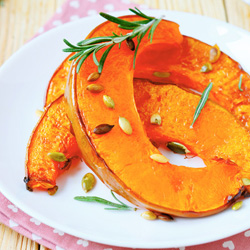
Roasted vegetables mix with autumn flavors
A rich flavour and health contour that can accompany a protein dish or simply eggs. By finding the right degree of cooking you will get 3 different consistencies: soft (pumpkin), tender (beet) and crispy (carrot).[/vc_column_text][vc_row_inner][vc_column_inner width=”1/2″]Ingredients
- 1 kg of round squash (e.g. violin)
- No. 4-5 carrots (about 250 g)
- No 2 red beets (about 3-400 g)
- No. 2-3 tablespoons of extra virgin olive oil
- 40 g of pine nuts
- 100 g of pomegranate
- 1 sprig of rosemary
- 1 rametto di rosmarino
[/vc_column_text][/vc_column_inner][vc_column_inner width=”1/2″][/vc_column_inner][/vc_row_inner][vc_empty_space height=”30px”][/vc_column][/vc_row][vc_row bg_color=”#f7f3ed”][vc_column][vc_empty_space height=”10px” css=”.vc_custom_1614599001025{background-color: #f7f3ed !important;}”][vc_empty_space height=”10px” css=”.vc_custom_1614599001025{background-color: #f7f3ed !important;}”][vc_column_text css=”.vc_custom_1614599014324{padding-top: 25px !important;padding-right: 26px !important;padding-bottom: 40px !important;padding-left: 25px !important;background-color: #f7f3ed !important;}”]
Preparation
Preheat the oven at 180 ° C.
Cut the pumpkin into slices, leaving the peel.
Peel the carrots or wash them with a brush for vegetables under running water; cut them into pieces of 2-3 cm.
Wash the beets and cut them roughly. From each root obtain 8-10 pieces.
In a bowl mix the oil and a little salt to prepare a seasoning.
Place a sheet of oven paper in a plate, pour the vegetables, mix with seasoning and bake for 30-40 minutes, turning half-cooked.
Illustrative purposes only
[/vc_column_text][vc_empty_space height=”10px” css=”.vc_custom_1614599001025{background-color: #f7f3ed !important;}”][/vc_column][/vc_row][vc_row][vc_column][vc_empty_space height=”40px”][separator width=”95%” height=”1px” color=”#dddddd” margin_top=”0″ margin_bottom=”20px”][vc_column_text css=”.vc_custom_1507718238429{padding-top: 10px !important;padding-bottom: 10px !important;}”]Article by:
Nutritionist Dr. Francesco Bonucci
The diet tips, written in the article, are not intended to be a substitute for a personal nutrition plan and are to be adapted to specific cases.
[/vc_column_text][vc_empty_space height=”40px”][/vc_column][/vc_row][vc_row css=”.vc_custom_1487776942618{padding-bottom: 40px !important;}”][vc_column][separator width=”95%” height=”1px” color=”#dddddd” margin_top=”0″ margin_bottom=”20px”][vc_column_text]Photo: 123RF Archivio Fotografico | ©andreka, 45341876, 2017-10-10 | ©olha, 26609216, 2017-10-11
[/vc_column_text][/vc_column][/vc_row][vc_row][vc_column][vc_empty_space height=”40px”][separator width=”95%” height=”1px” color=”#dddddd” margin_top=”0″ margin_bottom=”20px”][vc_row_inner][vc_column_inner width=”1/4″ css=”.vc_custom_1487868100050{background-color: #ffffff !important;}”][vc_column_text]

[/vc_column_text][/vc_column_inner][vc_column_inner width=”3/4″][/vc_column_inner][/vc_row_inner][vc_empty_space height=”40px”][vc_empty_space height=”40px”][/vc_column][/vc_row]