
 [/vc_column_text][separator width=”95%” height=”1px” color=”#dddddd” margin_top=”0″ margin_bottom=”20px”][/vc_column][/vc_row]
 [/vc_column_text][vc_column_text css=”.vc_custom_1504697390969{padding-bottom: 10px !important;}”]
Mayonnaise made “in lipidomic key”
Easy, comfortable and very pleasing preparation on the palate. Suitable for those who need to restrict egg intake for different reasons: allergies, limiting arachidonic acid intake, vegan feeding, etc.
Note: we have tried the recipe with different types of soy milk. For the success of the recipe, use natural products, obtained exclusively from soybeans, no sugars or other added ingredients.
[/vc_column_text][/vc_column][/vc_row][vc_row css=”.vc_custom_1487706986792{padding-left: 25px !important;}”][vc_column][vc_column_text css=”.vc_custom_1504697440581{padding-bottom: 10px !important;}”]
The NUTRI-lipidomic recipe
Lipidomic mayonnaise
[/vc_column_text][vc_row_inner][vc_column_inner width=”1/2″][vc_column_text]Ingredients
• 130 g of evo oil
• 1 teaspoon (5 g) of linseed oil
• 100 ml of soy natural juice
• 1 tablespoon of apple vinegar
• 1/2 teaspoon of turmeric
• 1 teaspoon of delicious mustard
• 2 pcs of salt.
[/vc_column_text][/vc_column_inner][vc_column_inner width=”1/2″][/vc_column_inner][/vc_row_inner][vc_empty_space height=”30px”][/vc_column][/vc_row][vc_row bg_color=”#f7f3ed”][vc_column][vc_empty_space height=”10px” css=”.vc_custom_1614593294694{background-color: #f7f3ed !important;}”][vc_column_text css=”.vc_custom_1614593361319{padding-top: 25px !important;padding-right: 26px !important;padding-bottom: 40px !important;padding-left: 25px !important;background-color: #f7f3ed !important;}”]
Preparation
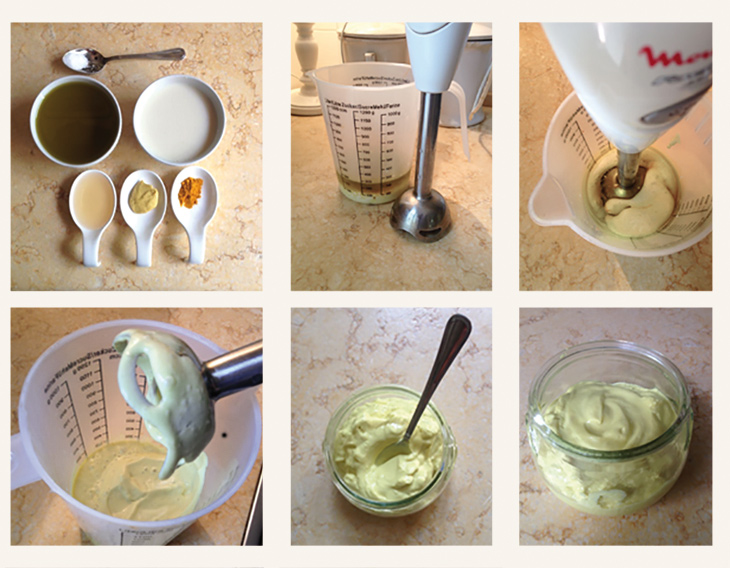
Put all the ingredients in the cup. Immerse the blender and whisk for about 1 minute.
Place it in a jar of glass and place it in the fridge for a couple of hours.
Store in the fridge and consume within 1 week.
 [/vc_column_text][vc_empty_space height=”25px” css=”.vc_custom_1490200314937{background-color: #f7f3ed !important;}”][/vc_column][/vc_row][vc_row][vc_column][vc_empty_space height=”30px”][vc_column_text css=”.vc_custom_1504697670371{padding-top: 25px !important;padding-right: 26px !important;padding-bottom: 40px !important;padding-left: 25px !important;}”]Fatty acid values (per portion 30 gr)
Total fat 16,70 g
Saturated fat 2,39 g
Monounsaturated 11,76 g
Total polyunsaturated fat 1,72 g
Linoleic acid ὠ6 1,26
Linolenic acid ὠ3 0,46
ὠ6/ὠ3 ratio 2,72
Arachidonic acid absent
[/vc_column_text][/vc_column][/vc_row][vc_row][vc_column][vc_empty_space height=”40px”][separator width=”95%” height=”1px” color=”#dddddd” margin_top=”0″ margin_bottom=”20px”][vc_column_text css=”.vc_custom_1490186724519{padding-top: 10px !important;padding-bottom: 10px !important;}”]Article by:
Nutritionist Dr. Francesco Bonucci
The diet tips, written in the article, are not intended to be a substitute for a personal nutrition plan and are to be adapted to specific cases.
[/vc_column_text][vc_empty_space height=”40px”][/vc_column][/vc_row][vc_row css=”.vc_custom_1487776942618{padding-bottom: 40px !important;}”][vc_column][separator width=”95%” height=”1px” color=”#dddddd” margin_top=”0″ margin_bottom=”20px”][vc_column_text]Photo: 123RF Archivio Fotografico | ©mayamo, 36870371, 2017-09-06[/vc_column_text][/vc_column][/vc_row][vc_row][vc_column][separator width=”95%” height=”1px” color=”#dddddd” margin_top=”0″ margin_bottom=”20px”][vc_empty_space height=”40px”][vc_row_inner][vc_column_inner width=”1/4″ css=”.vc_custom_1487868100050{background-color: #ffffff !important;}”][vc_column_text]

[/vc_column_text][/vc_column_inner][vc_column_inner width=”3/4″][/vc_column_inner][/vc_row_inner][vc_empty_space height=”40px”][vc_empty_space height=”40px”][/vc_column][/vc_row]