


L’importanza dei grassi nel nostro organismo
In questi primi venti anni del 21esimo secolo i grassi hanno finalmente preso una rivincita su tutte le altre molecole che formano il nostro organismo e la dieta, perché se ne è riconosciuta la loro indispensabilità per la salute. Non possiamo fare a meno dei grassi e questa cultura va diffusa il più possibile per evitare errori importanti che quindi possono provocare danni, anche seri. (C. Ferreri. Dalla Parte dei grassi, Mind Edizioni, 2019).
DHA: acido grasso indispensabile
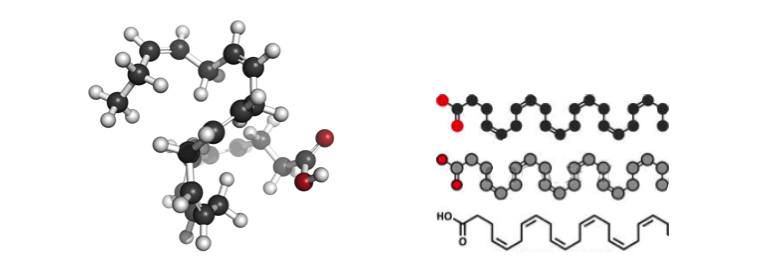
https://www.pathway27.eu/topstory/docosahexaenoic-acid/
Alla testa della lista dei grassi indispensabili vi è certamente DHA o, come correttamente viene definito, l’acido DOCOSAESAENOICO, la molecola mostrata nella figura e formata da 22 atomi di carbonio con sei doppi legami. Dal 2010, l’agenzia Europea EFSA per la sicurezza alimentare ne ha stabilito la quantità da assumere ogni giorno per ciascun individuo, che è 200-250 mg, sottolineandone l’importanza in gravidanza, allattamento e in alcune fasi della vita, come durante la crescita (EFSA Journal 2010 8(3): 1461). Nel 2014 (EFSA Journal 2014;12(10):3840) è stato verificato l’effetto di DHA sul “normale sviluppo cerebrale”, soprattutto per neonati e bambini al di sotto dei 2 anni con dosaggi di 100 mg/giorno e con dosaggi di 250 mg/giorno per l’accrescimento da 2 a 18 anni.
Insieme all’altro omega-3 EPA, nei dosaggi di almeno 250 mg, DHA contribuisce a mantenere la corretta funzione cardiaca (regolamento EU 432/2012).
Tali quantità possono essere certamente ottenute da una dieta che includa fonti di DHA, come alghe, oppure pesci che mangiano, appunto, le alghe. In 100 grammi di pesce possono essere ritrovati ben 500 mg di omega-3 (EPA e DHA), pertanto è veramente necessario consumare frequentemente questo tipo di alimento, per mantenere i livelli di grassi indispensabili alla salute.
La preparazione di DHA nell’organismo e le fonti alimentari
DHA può anche essere preparato dall’organismo? La risposta è SI ma, essendo un acido grasso della famiglia Omega-3, si deve necessariamente assumere il suo precursore – acido alfa-linolenico ALA – che il nostro organismo non può preparare (ACIDO GRASSO ESSENZIALE) e quindi deve essere introdotto con gli alimenti. Insomma, se non si assumono alimenti con DHA si dovranno per forza assumere alimenti con ALA!
Ma quali alimenti? ALA è presente in buona quantità nell’olio di lino e nei semi di lino (che però si devono triturare), in alcune verdure (spinaci), ma molto poco nelle carni, bovina oppure di pollo, e nei derivati di questi animali (latte, uova, etc.). La ragione di scarsità di fonti Omega-3 si trova anche nell’alimentazione seguita negli allevamenti di tipo “intensivo” per l’immissione al mercato di animali terrestri e marini. Per fortuna, stiamo assistendo in tempi più recenti ad una maggiore consapevolezza degli allevatori per la nutrizione animale, e i consumatori possono giocare un ruolo importantissimo per modificare il mercato in meglio, se scelgono prevalentemente di comprare prodotti derivanti da allevamenti con alimentazione e trattamenti naturali.
Come conoscere il livello di DHA nell’organismo
Se DHA non viene assunto direttamente da pesci o alghe, la sua preparazione – come sopra accennato – può avvenire da parte dell’organismo a partire da ALA e prevede 6 passaggi enzimatici (vedi figura).
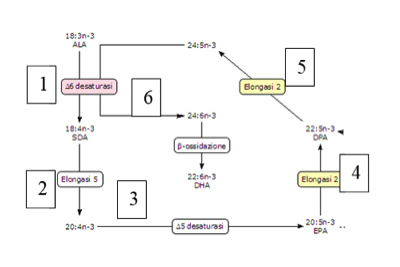
Gli enzimi coinvolti nella trasformazione di ALA a DHA devono essere efficienti, ma non è sempre così: nei casi di maggiore consumo di grassi Omega-6, oppure di deficit di alcune vitamine o minerali, questi enzimi non sono in grado di portare a compimento i 6 passaggi. Così DHA diminuisce man mano nell’organismo, e i tessuti nei quali esso è indispensabile iniziano a non ricevere sufficiente DHA per il loro funzionamento.
Questo può accadere nel caso di assenza di assunzione di pesce, e quindi se ci si basa solo su ALA per raggiungere le quantità necessarie di DHA. E’ il caso di diete vegane – soprattutto quelle in cui le alghe non vengono utilizzate.
In questo caso, diventa necessario conoscere il livello di DHA raggiunto nel proprio organismo.
Come? In prevenzione attiva si può andare nelle Farmacie specializzate e chiedere di eseguire l’analisi lipidomica di membrana eritrocitaria fatpharmacy®, che Lipinutragen ha messo a punto con un’apparecchiatura robotica unica al mondo, garantendo precisione ed affidabilità.
Visti i tessuti dove DHA svolge un ruolo fondamentale (cervello, cuore), i livelli di DHA non possono abbassarsi. Si conosce la percentuale ottimale presente nella membrana del globulo rosso maturo (5-7%) e, se attraverso l’analisi fatpharmacy®, il livello di DHA risultasse vicino o addirittura sotto il 5%, si deve intervenire con l’alimentazione, in primis, oppure con l’integrazione di DHA almeno di 200-250 mg al giorno.
Gli integratori a base di DHA: come sceglierli?
Proprio per l’integrazione di DHA e la scelta di qualità degli integratori in commercio si sottolineano i seguenti punti per il consumatore:
- DHA è una molecola molto sensibile all’ossidazione, quindi l’integratore di DHA deve contenere anche uno “scudo” ben studiato per la protezione di questa molecola così preziosa. Per esempio: vitamina E, vitamina C e astaxantina sono una triade ideale per la protezione in tutti i distretti corporei (acquosi e lipidici).
- DHA somministrato come trigliceride da olio di pesce deve trasformarsi in fosfolipide nell’organismo, perché in tale forma entra nella membrana cellulare, come costituente dei tessuti. I trigliceridi a base di DHA devono quindi essere anche accompagnati da “facilitatori” del loro metabolismo, come ad esempio dalla molecola di alfa-glicerilfosforilcolina, che è il “mattone” indispensabile per la preparazione dei fosfolipidi;
- Infine, l’integratore di DHA non deve contenere altri grassi indesiderati, come grassi saturi e grassi trans, perché l’effetto benefico di DHA si riferisce ad una fonte pura di questo acido grasso, e non mescolato ad altri grassi che interferiscono nel suo metabolismo, distribuzione ed effetto.
Mentre DHA nell’alimentazione viene digerito insieme a tutte gli altri componenti attivi del cibo, DHA nell’integrazione deve essere nella giusta formulazione per essere in grado di raggiungere la membrana cellulare da dove esercita la sua azione indispensabile. Quindi la formulazione deve assicurare che la dose somministrata per via orale sia assorbita, protetta durante la biodistribuzione e incorporata nei fosfolipidi delle membrane biologiche, come avviene con le capsule soft-gel. Se serve una verifica dei livelli raggiunti dalle somministrazioni si può eseguire l’analisi fatpharmacy®, dopo qualche mese di assunzione.
Integrare DHA in età infantile
Vogliamo concludere con l’osservazione che i deficit di DHA (al di sotto di 5%) sono stati riscontrati in bambini affetti da disturbi comportamentali (ns. lavori pubblicati su PlosONE 2013 PLoS ONE 8(6): e66418 e Scientific Reports di Nature 2017, 7, art. no 9854). Anche se non si può indicare tale deficit come unica causa di tali disturbi, la diminuzione di DHA deve allertare il medico per la possibilità di una patologia da “deficienza di acidi grassi essenziali” (EFA deficiency). A questo punto, accertato il deficit, in bambini fragili si deve intervenire per assicurare l’assunzione di questo elemento così necessario allo sviluppo neuronale. A tale scopo si crea un piano alimentare con l’utilizzo frequente di alimenti sopra indicati. Però, se non si possono assicurare i livelli indispensabili di DHA (250 mg al giorno), si può ricorrere all’integrazione assicurando la qualità dell’integratore prescelto, come sopra spiegato.
L’integrazione migliore per bambini è quella in forma liquida e in particolare sta per entrare in commercio una formulazione in microemulsione, studiata appositamente con le caratteristiche sopra riportate, per la sicurezza del raggiungimento del sito attivo di DHA, la membrana cellulare.
Articolo a cura della Dott.ssa Carla Ferreri – Primo ricercatore ISOF-CNR e Socio fondatore Lipinutragen
Foto: 123RF Archivio Fotografico: 28422874 @pichetw /123rf.com | www.pathway27.eu/topstory/docosahexaenoic-acid/